
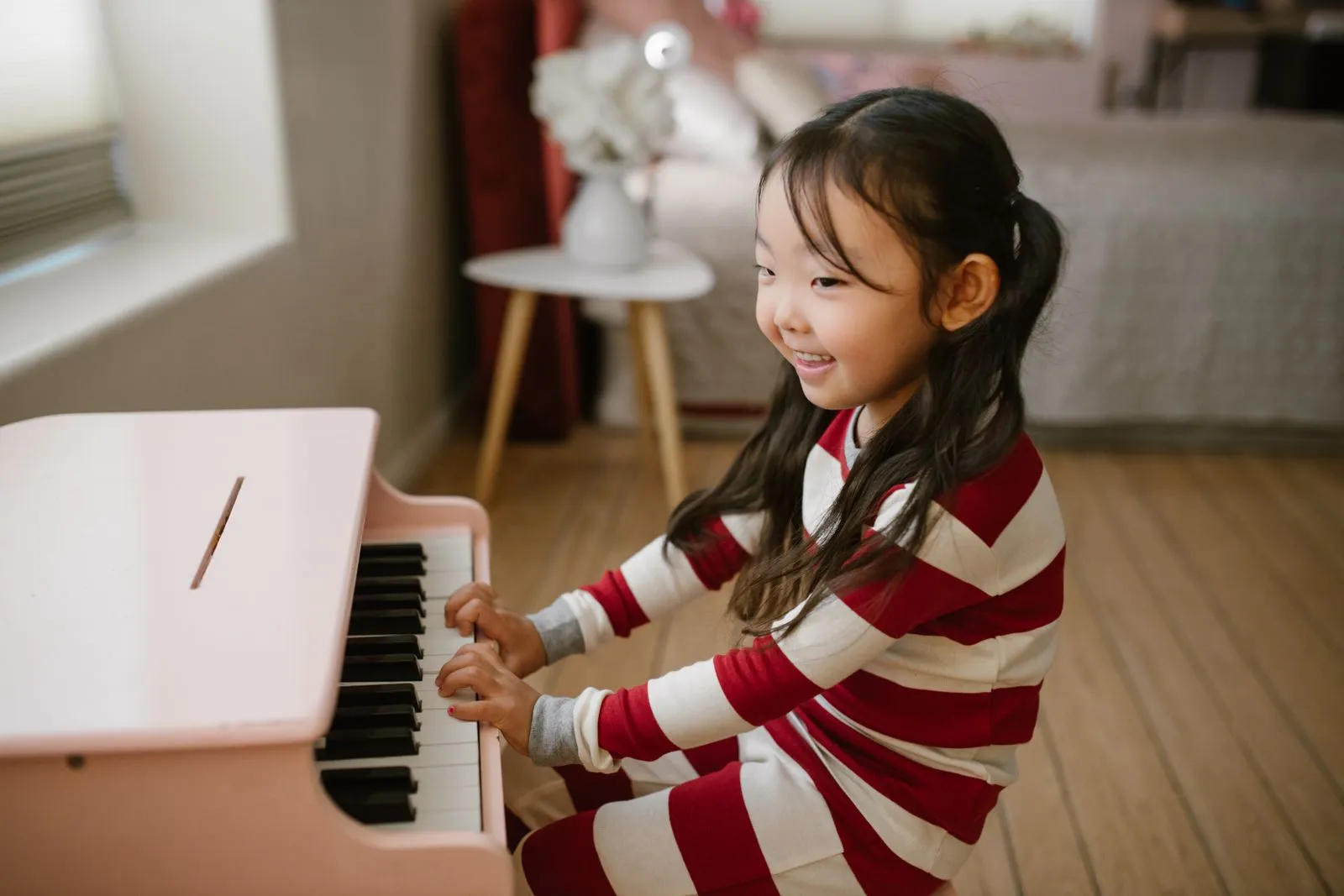
Preschoolers can explore music long before they sit down for a formal piano lesson. Clapping, moving, and listening help them notice patterns and feel a steady beat with their whole bodies. Keep activities brief, playful, and easy to repeat. There is no need for special equipment or perfect timing. The goal is to help a child listen, respond, and enjoy making music—skills that can later support piano playing.
Start with a simple clap
Choose a short, familiar song and clap along at a comfortable pace. Invite your child to copy you, then pause and let them lead. If keeping the beat feels difficult, slow down and use fewer words: clap steadily while singing or humming. Avoid turning the game into a test. A child may clap, tap their knees, or simply watch before joining in.
Try a copy-me pattern with just two or three claps. For example, clap twice, wait, and invite your child to repeat it. Keep a steady pause between turns so the pattern is easy to hear. Once the child gets the idea, let them invent a pattern for you to copy. This builds careful listening and gives them a chance to make musical choices.
Put the beat in motion
Play a song with a clear, even pulse and move together. March, sway, tiptoe, or gently pat your knees in time. Change the movement when the music changes, and stop when the sound stops. These simple cues help children connect what they hear with what their bodies do. Choose a safe space and movements that suit your child’s energy and coordination.
You can also make a movement walk without recorded music. Tap a steady beat on your knees while your child walks, then switch roles. If the steps speed up or slow down, calmly find a comfortable pace together. Focus on noticing the beat, not correcting every step. A few minutes of movement is enough; stop while the game still feels fun.
Listen for sounds and patterns
Use everyday sounds to practice listening. Tap a wooden spoon gently on a bowl, shake a container with a secure lid, or clap once and wait. Ask your child to listen, then respond with a sound of their own. Keep objects safe and supervise closely. Take turns making a sound and guessing whether it was loud or soft, long or short.
Play a musical stop-and-go game: make a steady sound while your child moves, then pause so they can freeze. Start again when they are ready. You can also listen to a song and notice when a phrase repeats or when the music becomes quiet. There is no need to name musical terms. Asking, “What did you hear?” encourages attention without pressure.
Connect play to the piano
Once a child enjoys keeping a beat, bring the idea to the piano in a low-pressure way. Tap a few steady beats on the closed lid or play one comfortable note while the child claps or marches. Take turns: one person makes a sound, and the other keeps the beat. Keep the activity short and let the child choose when to switch roles.
Preschoolers develop at different rates, so aim for shared attention and enjoyment rather than exact timing. Repeat favorite games, offer simple choices, and end before your child gets tired or frustrated. These playful experiences give children a useful starting point for piano lessons: listening closely, responding to a beat, and feeling comfortable making music.
A steady beat can begin with a clap, a step, or a sound worth listening to. Keep rhythm games short, repeat the ones your child enjoys, and let them take the lead. When you are ready to explore piano activities for preschoolers, contact Little Key Piano in Tacoma.